Greenery Becoming Floral Stars
By Jill Brooke
There was a time that finding a variety of lush greens was not a priority. Even the name they were assigned – filler – didn’t exactly scream special or worthy of focus.
However, with the advent of sustainable agriculture and floristry soaring in popularity along with people coveting a windswept meadow look, greenery is having its moment.
“Flowers need the greens,” says David Kaplan, president of Above All Flowers which sources florals and greens worldwide. “Greens are becoming more important every day in all sectors of the floral trade. There are more and more distributors that focus on predominantly selling mostly greens.” The public also is recognizing their importance and having fun with it.
Many also are looking for draping greenery – especially for arches or large vases. “My favorites are Sprengeri, Plumosus, and Weeping Podocarpus,” says Buffi Smith from the Alpha Fern Company. “Plumosus and Sprengeri in particular can come in long lengths for dramatic draping.”
With the public’s focus on green, there now are many options to enhance floral arranging.
Here is a list of greenery to know and love.
RUSCUS
The green world’s superstar is the ruscus. Particularly the Italian version with its slender and elongated glossy leaves. The Italian ruscus is indeed a classic – as reliable as a navy blazer or black cocktail shift. It does dress up any flower arrangement.
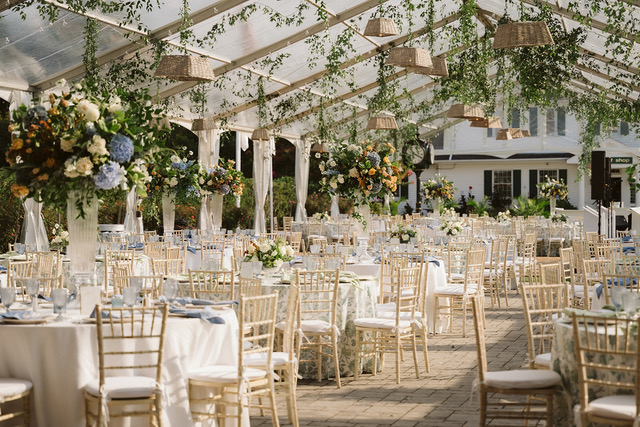
It is also being used in garlands because of its natural length and grace. As we know, garlands for wedding railings and tables are uber popular right now for every venue. Averaging $1 a stem, it is the more expensive ruscus variety.
The Israeli option averages 20 cents a stem and is indeed used primarily for inexpensive bouquets, including those at supermarkets. What’s interesting is that the Italian ruscus will retain its value because this particular variety only flourishes in Italy. “The Israeli option,” adds Kaplan, “can now be grown in Florida, South America and other locations. Easier to get.”
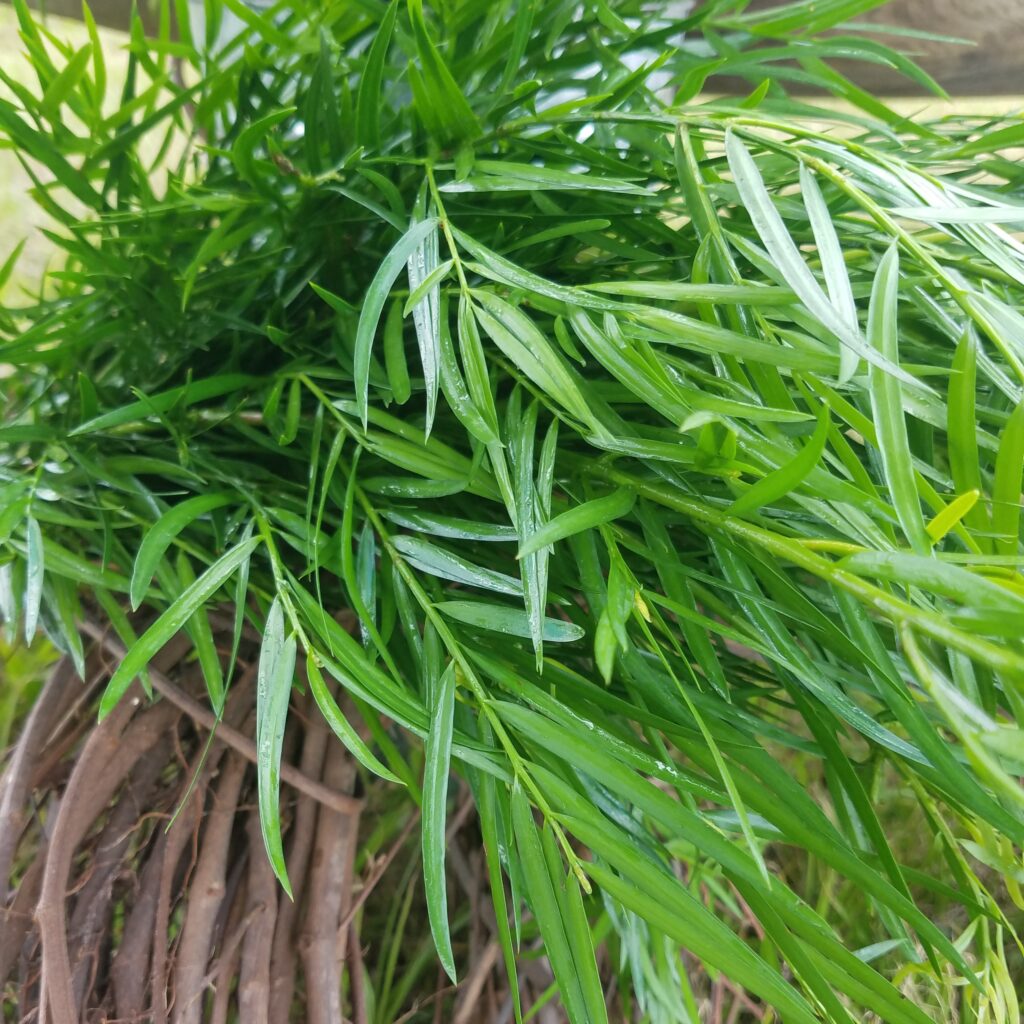
Darryl Rallis, who owns the must-go wholesale store George Rallis in New York City’s flower market, is also seeing an uptick in novelty greens. “The umbrella fern is the new one people are wanting,” he says, noting that it is being shipped from Australia. It has a wispiness that adds heft but also a lightness people are wanting.
The salal lemonleaf of course is also the go-to variety for bridal bouquets because of its lush draping and lighter color. Variegated colors – such as the mini pitto – are having a comeback as well since garden themes are so popular at big events.
EUCALYPTUS

Instead of a few options for Eucalyptus leaves, there are so many more to choose from as a florist including seeded varieties. There’s the willow, the silver dollar, the gumdrop, the baby. Breeders have also been listening to florists who complained that the traditional eucalyptus can be rigid.
Over at Damselfly Designs, which has over 20 stores in Brenda LaManna’s growing empire on the East Coast, Ashley Drago, creative director and event lead at the company, found one they recommend.
“True Blue” is my favorite variety of eucalyptus,” she shares. “It isn’t as rigid as spiral, and you get more stems per bunch than cinera. It’s the perfect length for all size centerpieces, yet hefty enough to make an impact in larger arrangements such as urns. Because of its silvery, antique color, and its soft fragrance eucalyptus will never go out of style.”
SMILAX
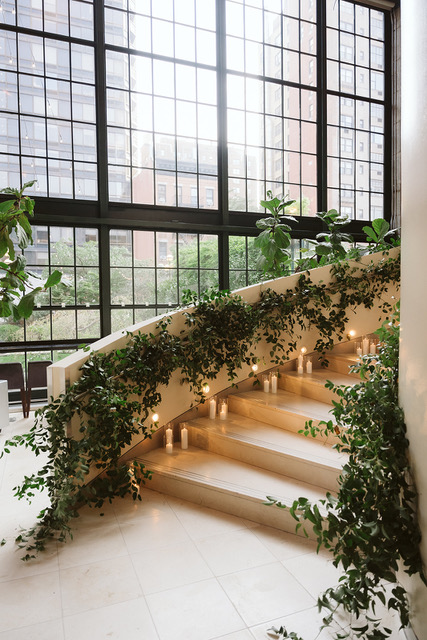
Another reliable green star is the southern smilax. Those vine-like plants convey the feeling of bringing the garden into the home. However, since grown in Texas and Alabama, it is not a 52 week supply for these stunners so plan ahead.
But they are worth it. In fact, for the 100th anniversary of the Horticultural Society gala in Virginia, when I was working with former White House florist Laura Dowling, she used the smilax for ceiling work. What I learned from that experience is you do not have to gild the lily. In fact, Dowling only used smilax and added lights creating a lovely effect without the addition of flowers or added labor. The draping effect hit all the right notes and the light created sparkle.
“For large installations such as ceilings, or covering a structure such as an Arch or Chuppah, you can not beat southern smilax,” adds Drago, Creative Director and Event Lead, Damselfly Designs.
“It comes in boxes, packed per foot. Smilax is a long, hearty, vine approx. 4ft to 12ft in length with the prettiest, richest green foliage. It also works great to cut down the laterals into smaller pieces to use in table styling, and centerpieces.”
For smaller, more detail oriented work, such a bud vases and bouquets, Drago is a fan of Stamina Japonica, a natural, very ethereal looking greenery. “It can be cut down into smaller pieces but the best portion of the stem is the tip as it tapers, curls and climbs. Very whimsical and airy!”
LEPIDIUM
My personal favorite is lepidium – especially for bud vases. Some of the best varieties are created by the breeder Danzinger, which operates advanced propagation facilities in Guatemala, Israel, Kenya and Colombia.
Lepidium has a gentle whimsy I just adore. Just recently on a job where the budget was anemic, I lined up a table with bud vases and used this green in each bud vase. Then I added a variety of flowers – rationing the roses and adding daisies and carnations. The consistency of the lepidium made it seem immensely special even when the flowers weren’t all dazzlers. It was money well spent on the few showstopper roses- which I rationed to ends of table and in the middle – because the greens added a dreamy effect. I then added a little ivy in between the vases and poof – mission accomplished.
Florists also need to have ferns in their repertoire. Among the ferns the Florida based wholesale firm Alpha Ferns recommends are Leatherleaf, Maidenhair, Ming Fern, Asparagus Fern, the Sword Fern, the fluffy Tree Fern and for those wanting a bit of drape, the Sprengeri Fern – pronounced spring – ray.
Maybe because people are shifting towards darker colors – the mood of the times perhaps – there is the Cordelyne Black XL. Sounds like a sports car doesn’t it? But it’s a tropical leaf. These long eggplant colored leaves are perfect to wrap in vases for big impact as well as using in big vases. Otherwise you have the Dieffenbachia Lemon which is the traditional green big leaf but this version has a beam of yellowy sunlight infiltrating its leaves for a lovely effect.
MONSTERA
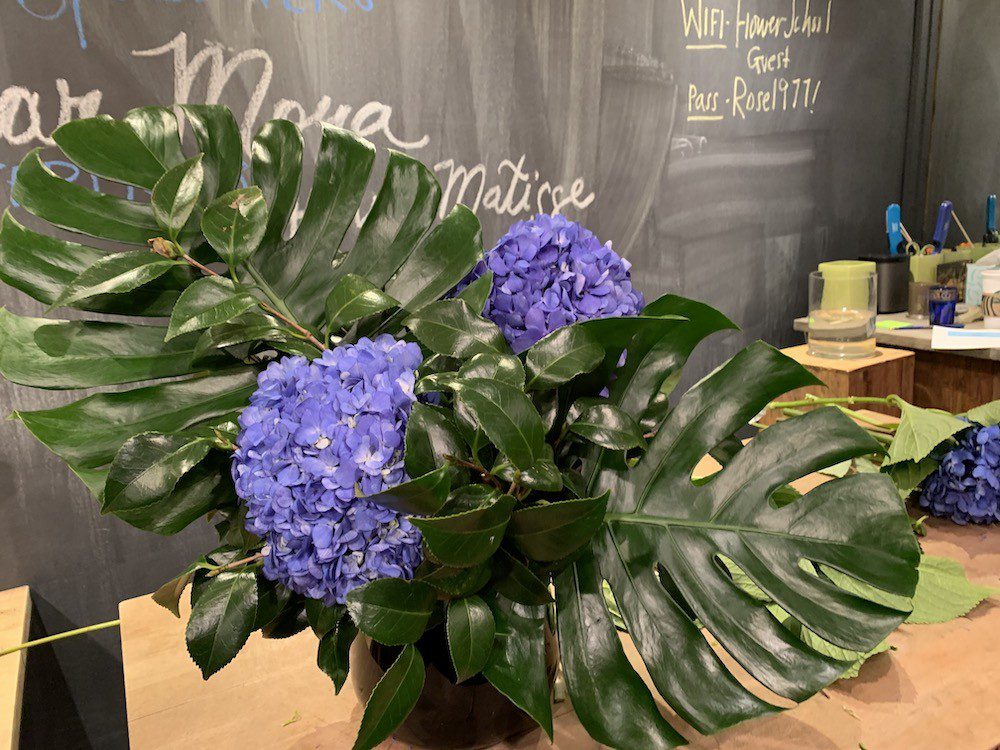
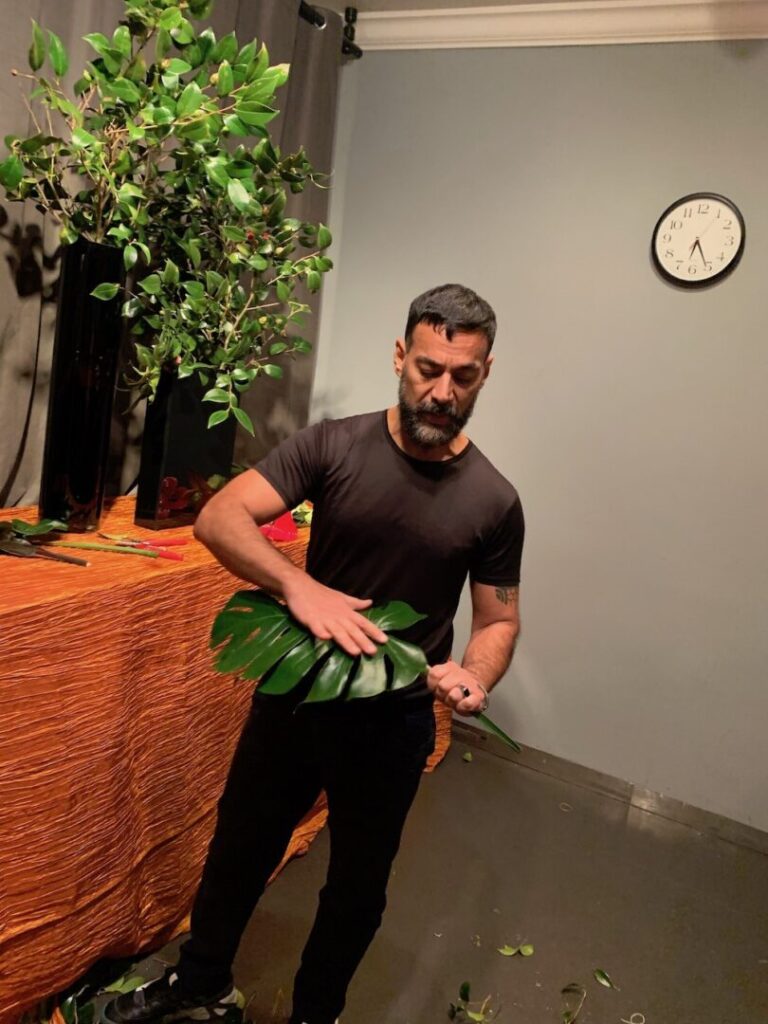
Floral star Oscar Mora, whose clients include Lalique and Lincoln Center in New York along with many celebrities, likes tropical greens for the “drama.” Long before it was cool, he used giant monstera leaves in his work in tall vases. For a recent job to open a Lalique store, his whole composition was in “greens” because it was a design that felt energetic and alive.
Before we list all the varieties that are worth having in your floral vocabulary, want to also give a big shout-out to moss.
Gilles Fumat along with his wife Mira run Mossman Inc out of Gainesville, Florida. The popularity for florists to create green walls at parties, event openings and weddings has created a demand for mosses. Their company has been in business for more 35 years and continues to expand their offerings.
“Ten years ago we only sold only through a distributor but now florists can buy directly from us,” he shares.
The company’s reindeer moss allows florists to dye the moss in colors corresponding to their palate. In fact, they offer one in Pantone’s “Mocha Mousse” to tap into that color trend. Spanish moss, an airplant, is also popular.
Although traditional flat sheet moss is still selling strong, the clump “mood” moss also has risen in popularity for use as filler for not only arrangements and orchids but for those green walls to create more textured greenery.
What I’m most excited about is as of May 1st, the company will be selling pre-cut moss squares for event tables in 15 3/4 inches which, as Fumat says, “will help not only for wedding season but for outdoor tables for any party.”
MOSS
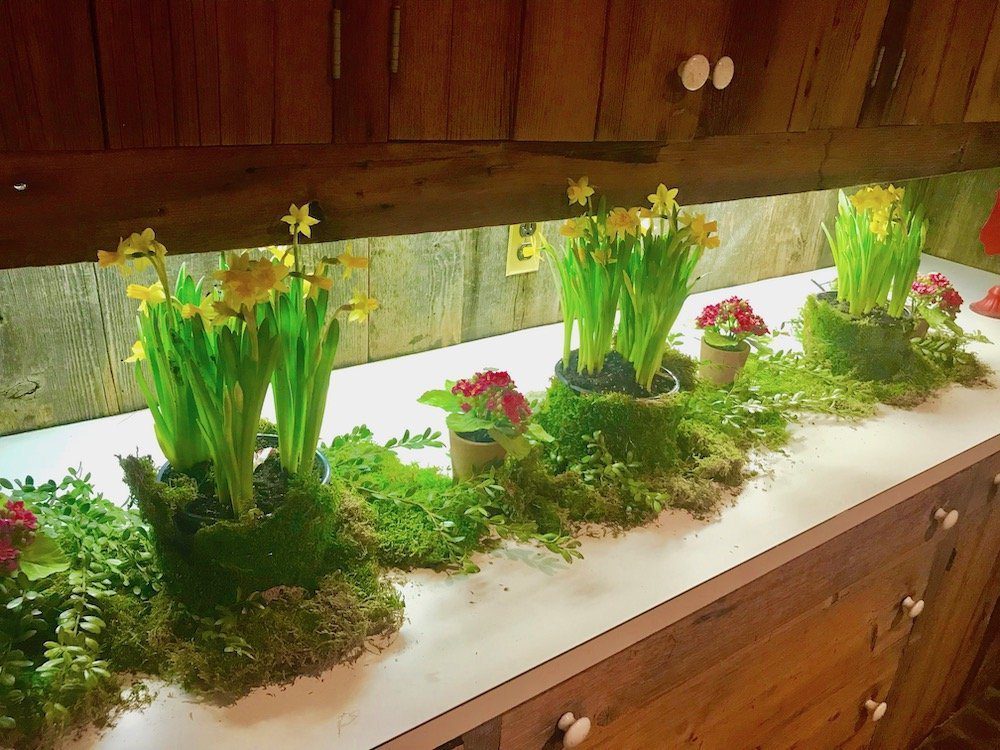
The many advantages of moss is that it stays green indoors and lasts so florists can reuse it repeatedly without diminishment in quality or color.
All these options will help up the game of any floral lover.
However, a concern and reality is shipping costs for your area. As Darryl Rallis points out, much of the nation’s greens are grown in California and Oregon. Prices have soared. “The years ago it cost $40 a box to ship and now it’s $100,” he says. Companies like Above Flowers with 40 years of experience also help in finding wholesalers closer to your region to diminish costs. For example, a delphinium can cost 10 cents vs. 60 cents if shipments are in trucks vs. Fed Ex. So always ask about shipping costs.
In earlier years, when costs weren’t so high, florists would fill their vases with an 80 flowers to 20 green ratio. Now that ratio has narrowed says Oscar Mora because “of the cost.”
That is not to say that some greens aren’t incredibly expensive. For example, Mora shared how he just bought a bunch of yellow mimosa for $4-6 a bunch. But for a recent job that needed a “lot of glamor,” he purchased a Japanese blue variety that cost “$125 a bunch.”
“With all the varieties of green on the market, florists can be creative,” says Mora, not only in design but price. “Greens will always be,” adds Mora, “cheaper than flowers.”
Popular Greens To Know in More Detail
1) Salai – Brides love these – also known-as lemon leaf, best used for bouquets and centerpieces. It has broad glossy dark green leaves. They are known for their round to oval-shaped leaves and strong, woody branches.
2) Aralia is another popular one with its large multi-point leaf. Aralia is also called finger plant or hand plant because of the resemblance of the leaf shape to a hand.
3) Ruscus – The leaves are more slender and elongated. The Italian version is more expensive than the Israeli. Italian versions used more in weddings for the pop of extra gloss and the Israeli versions for every day floristry.
4) Eucalyptus – the go-to for florists for fillers – Shapes include willow, silver dollar, gumdrop, baby blue, feathery, seeded, and parvifolia Eucalyptus which has the desired small pointed leaves on either side of the stem. Plus it smells lovely.
5) Lepedium – Known as “Green Dragon” or “Peppergrass,” Lepidium’s delicate, branching stems covered in tiny seed pods make it an excellent filler, adding a whimsical, country garden look to floral arrangements. It can also be dried. Some use it as an accent color since it is so individually beautiful. Dried..silver and gold for . Orange and yellow
6) Tropical – Sago Palm Leaves along with Robellini are big impact greens. Monstera are immensely popular for its density and having slits inside the wide foliage. The Palmetto Fans with a width of between 12-15” add dramatic flair to any design.
7) Pittosporum – Width is a plus and it’s lush. Also known as Australian laurel, it comes in variegated and green versions. “Variegated Outsells the green 10-1 – Its long-lasting nature and ability to hold water make it a great base for bouquets, centerpieces, and installations. Though florists are encouraged to spray it to hydrate it for longer use. It’s good to fill in gaps and create a fuller, more lush look in arrangements.
8) Ferns – With their varied frond shapes and sizes, ferns can add a natural, organic texture to arrangements, contrasting with the smooth petals of flowers. Popular varieties include leatherleaf – the classic for its flat-triangular-shaped leaves, sword for its straight upright fronds and asparagus fern, a popular choice for wedding flowers because of its delicate needle-like foliage. These are also known as the Plumosa. For a draping fern, there’s the Sprengeri Fern.
9) Grasses – Lily grass is trending as is bear grass.
10) Magnolia leaves – With its brown and green coloring, popular in fall and Christmas
11) Ivy – oldie but goodie. It is perfect for adding the final touch on a table or even to create a cascading effect to any arrangement. The California based company Mellano, which is celebrating its 100th anniversary, has sturdy varieties that are ideal to add pizazz to arches and as a finishing flourish. Furthermore, ivy has a longer lifespan than most types of greenery; it lasts for months or even years, so it works great for home decor during holiday months or celebrations.
12) Myrtle is popular to many because of the variety of ways that it can be used. It has long stems that are lined with glossy leaves. The thick foliage that this creates looks best in floral centerpieces. It also exudes a sweet fragrance that makes it perfect for home decor. The myrtle is a representation of love as well and found in wedding arrangements. Though because of more competition in the greenery world, it is now part of the many options to create lush beauty through greens.