
Daffodil Care: Planting, Growing & March’s Flower Symbolism
By Linda Lee and Jill Brooke
Daffodil Care Tips: How to Grow, Maintain, and Celebrate March’s Beautiful Symbol of Spring
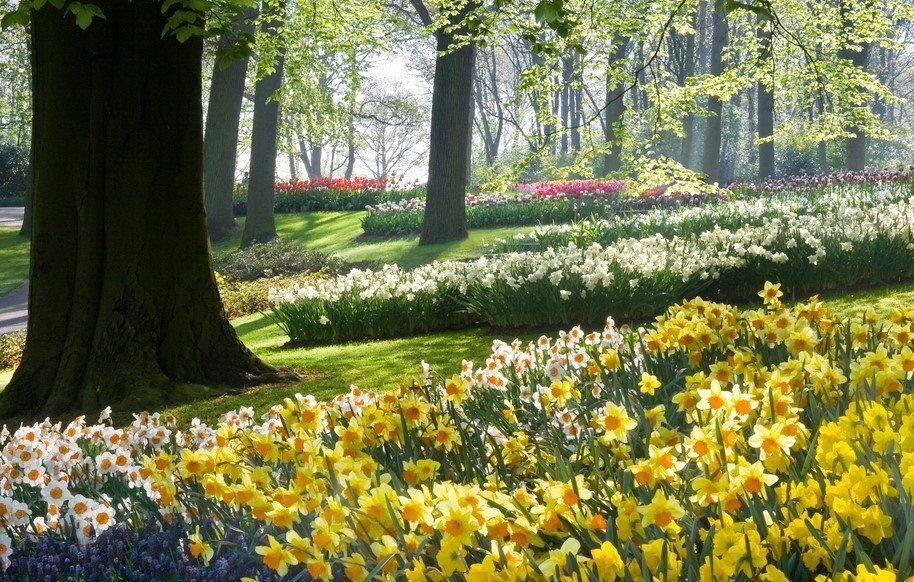
Before we delve deep into daffodil care tips, Daffodil is the trumpet of spring and flower of March; finally here. The first large flower to bloom in the landscape (let’s ignore the snow drops and the squill), the daffodils, blooming in broad sweeps across hillsides, proclaim that spring is finally arriving. As such it symbolizes rebirth and new beginnings.
The Latin name for daffodil is narcissus, named after the son of the river god. Narcissus (the root of the word “narcissism”) was known for his beauty, and for his admiration of himself. It is said he spent a great deal of time bent over the edge of pools, admiring his own reflection. He so fell in love with his own reflection that he drown, and so became the beautiful yellow and white flowers that grew nearby, nodding their heads toward the water.
There are only 36 species of daffodils in the wild, according to Kew Gardens, but in fact there are a staggering 26,000 cultivated varieties. Daffodils grow all over the world.
Daffodil lovers may also want to go to the American Daffodil Society convention on April 10th, 2025 in Reno, Nevada.
Each fall I plant a few varieties to spice up my garden. I have my reliables and then the special ones that add intrigue and the idea of planting something for the future to enjoy.
Can’t wait for some of my new additions including a fragrant gardenia blend from Brent and Beckys, as well as Brecks, and one called Riot which has a big red trumpet in middle of white petals. High style indeed.

Daffodils are the perfect addition to any garden, but how do you best plant, grow and care for these vibrant beauties?
But before growing tips, here is what to do with daffodils once you put them in the vase.
PROMOTING VASE LIFE
When you cut the tube-like stems, you will notice liquid oozing from the cut. This liquid is actually called ‘mucilage‘ and contains calcium oxalate crystals (in addition to a toxic alkaloid called narciclasine) and is part of what daffodils use to protect themselves from would-be nibblers. The sap though is most commonly called lycorine, a type of alkaloid.
When it comes to daffodil care, especially cutting daffodils for arrangements, it’s recommended to let them sit in a separate vase of water for a few hours to allow the sap to “bleed out” before mixing them with other flowers. Otherwise, the surrounding flowers will die from the toxic sap. Or sometimes I just put a lighter at the tip and burn it if I’m in a rush. However, if you want to mix daffodils with other spring flowers, remember not to cut stems as you do every other day to refresh the flowers in the vase. Cutting their stems again will just start their latex flowing again.
The Ultimate Daffodil Care Guide
| Care Aspect | Daffodil Care Tips |
|---|---|
| Planting Time | Plant daffodil bulbs in the fall, typically between September and November, when soil temperatures are around 60°F. |
| Planting Depth and Spacing | Place bulbs 3 to 6 inches deep in well-draining soil, with 5 to 12 inches between bulbs. |
| Watering | After planting, water bulbs immediately and continue to water them once every day for about three weeks. |
| Sunlight | Ensure daffodils receive at least six hours of sunlight daily for optimal blooming. |
| Fertilizing | In spring, apply a low-nitrogen bulb fertilizer to support healthy growth and flowering. |
| Post-Bloom Care | Allow foliage to die back naturally after blooming to store energy for next year. |
| Dividing Bulbs | To prevent overcrowding, divide daffodil bulbs every three to five years during late spring or early summer. |
| Extending Bloom Period | Plant early, mid-season, and late-blooming varieties for continuous blooms throughout spring. |
DAFFODIL CARE TIPS TO INSURE GROWTH
The following guide provides everything you need to know about daffodils, from planting tips and how to cultivate them within your own garden to how to pick them and arrange them within a vase.
Read on, enjoy, and get gardening!
Daffodil Care: Potential Problems and Why They’re the Easiest Blooms to Grow
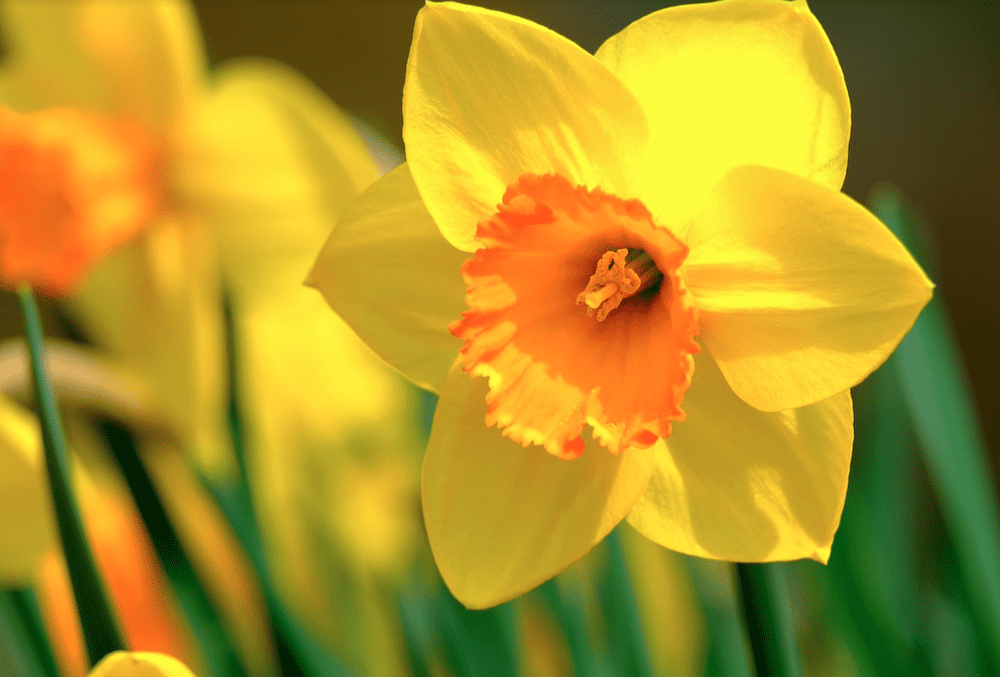
Special information: You may hear about things like basal rot, bulb fly, nematodes, scorch, smoulder, snails, deer (!) and virus. Take it from us, daffodils are the least fussy plants in your entire plant arsenal. In general, deer and squirrels hate them. Very few pests attack them. Once daffodils are planted, you can pretty much forget them. They will naturalize, multiply and occupy that part of the lawn, forest, garden, pathway, understory, allee, yard, field, hillside, graveyard, garden, pathway, patch around the flagpole, town square … just about wherever you planted them as well as country meadows and stream sides and coves in Wales and … you get the idea.
Some Important Daffodil Care Planting Tips
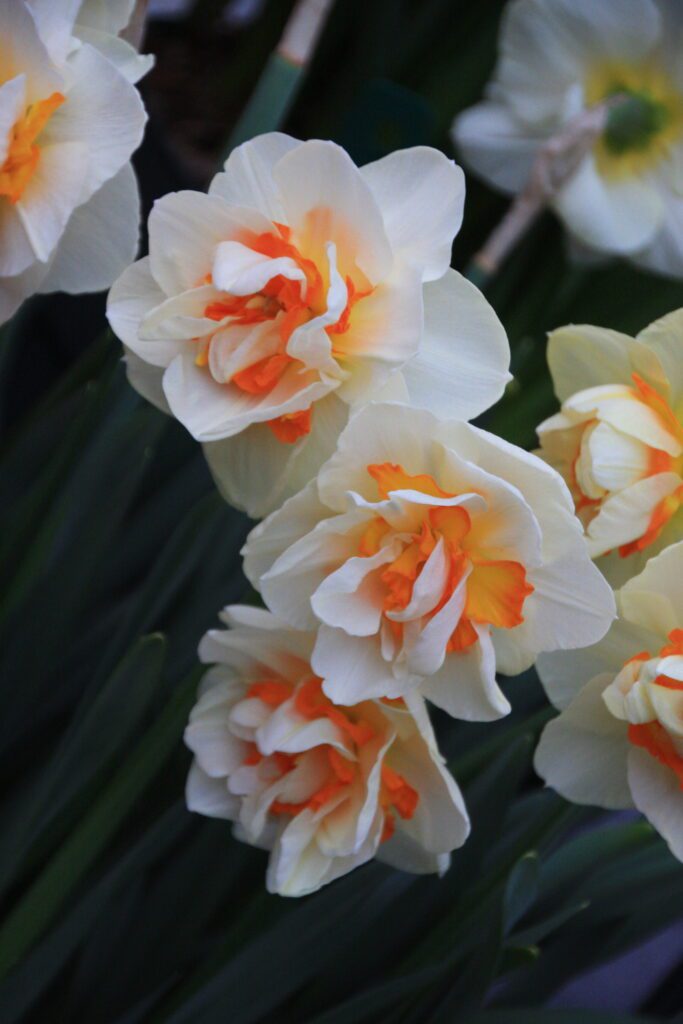
Combine early and mid-season bloomers. The tiny tete-a-tete, a miniature daffodil, will give you an early thrill. On the full blown side, try early bloomers like Narcissus Rijnveld’s Early Sensation and February Gold, then plant mid-season all-white daffodil like the old-fashioned “poet’s daffodil” or pheasant’s eye (Poeticus Narcissus) and a late bloomer like the old-fashioned “narcissus geranium,” the Tazetta daffodil, with its white petals and cheerful yellow cup. Bonus: it has a haunting scent.
This is the most important thing. You know how to plant daffodils: dig a hole, about twice as deep as the bulb is high, toss them in and cover them up.
That’s not the hard part. The important thing is the way you plant them. Not in a line, like a row of peas.
Daffodils should look natural. They deserve to be planted in loose clumps, never in mathematical groups of three and five. They should look like natural sweeps of flowers, curved beds.
True they will eventually multiply and become islands of daffodils. Still, from the start, daffodils should be planted with a generous hand.
Because you are going to have to leave the daffodils’ leaves on after the flowers have finished blooming, put them somewhere other than in the middle of the lawn. (You don’t want to mow the leaves off, or there won’t be any daffodils next year; that foliage needs to feed next year’s bulb.)
So best to plant them in a natural-looking composition on the edge of the property line. Make them a transition to the woods.
There are also wonderful daffodil festivals around the country. One of our favorites is the 46th annual Nantucket Daffodil Festival which will take place in April. Yes, it’s not March but it gives you time to think about it and plan.