940 MILLION Roses Sifted Through Miami for Valentine’s Day

Lovers and friends will have no problem finding roses this season whether for Galentine’s Day or Valentine’s Day.
Miami International Airport have processed about 940 million stems of cut flowers, according to U.S. Customs and Border Protection. Around 90% of the fresh cut flowers being sold for Valentine’s Day in the United States come through Miami, while the other 10% pass through Los Angeles.
Roses, carnations, pompons, hydrangeas, chrysanthemums and tulips arrive on hundreds of flights, mostly from Colombia and Ecuador, to Miami on their journey to florists and supermarkets across the U.S. and Canada. (Those looking for extra special roses should look for those coming from Ecuador’s Rosaprima.).
So why aren’t there more U.S. flower farms producing roses? According to American Grown CEO Camron King, there are only 12 major commercial flower farms.
“We buy American grown roses but many of the U.S. rose farms can’t afford any more to grow roses for the Valentine’s Day demand because of the heating costs,” adds Joost Bongaerts, CEO of Florabundance, a California based wholesaler of flowers. “The majority of roses now come from South America.” The weather there, especially in the
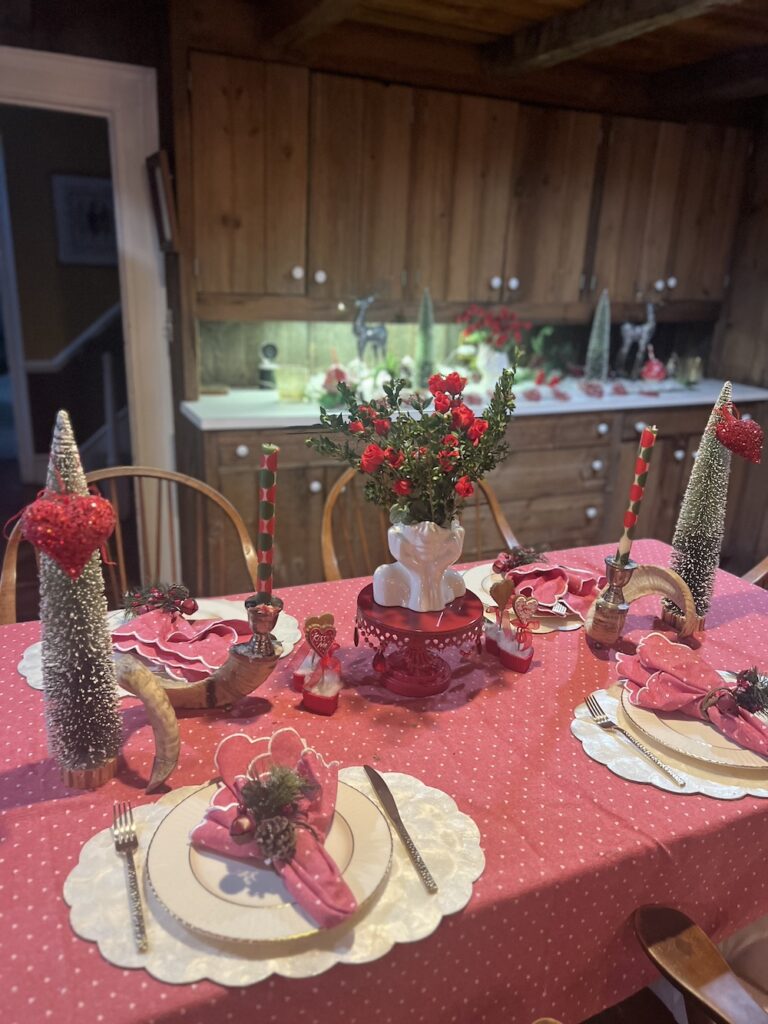
I for one have just decorated my kitchen for a girlfriend gathering called “Galentine’s” Day which takes place now the 13th of February. First mentioned on the TV show “Parks and Recreation,” it is a way to express gratitude and love for your friends. Great way to let people know that you love them – especially those who may not have a partner in their lives – but are grateful to have great friends.
The above photo is inspiration from Lewis Miller. Mine is a little more rustic but should be fun too.
The national average for a dozen roses this Valentine’s Day is going to be $90.50. That’s a 2% increase from last year, according to FinanceBuzz.
“A lot goes into flower prices — it’s not solely the rise in the price of goods, but more of a function of an entire agricultural system that relies on transportation, logistics, and of course, weather,” said Josh Koebert, a senior researcher at FinanceBuzz.
He said prices this year are more in line with inflation, versus last year when there were other factors like “erratic weather patterns impacting flower production around the world, increased costs associated with shipping and the supply chain post-COVID, and general increased demand for plants and flowers.”
In 2025, Americans are expected to spend $2.9 billion on flowers for Valentine’s Day.
But it’s worth it. Nothing says love like roses.