The Purple Accord: Finding Common Ground Through Flowers
Political violence has escalated in America, with lives lost on both sides of the partisan divide—from conservative activist Charlie Kirk to Minnesota Representative Melissa Hortman—leaving many shaken and desperate for gestures that might restore a sense of shared humanity.
How do we reconnect with family, friends and neighbors we stopped speaking to because of political disagreements or other issues? How do we do better than those around us who continue to flame partisan divisiveness? Maybe try “The Purple Accord.”
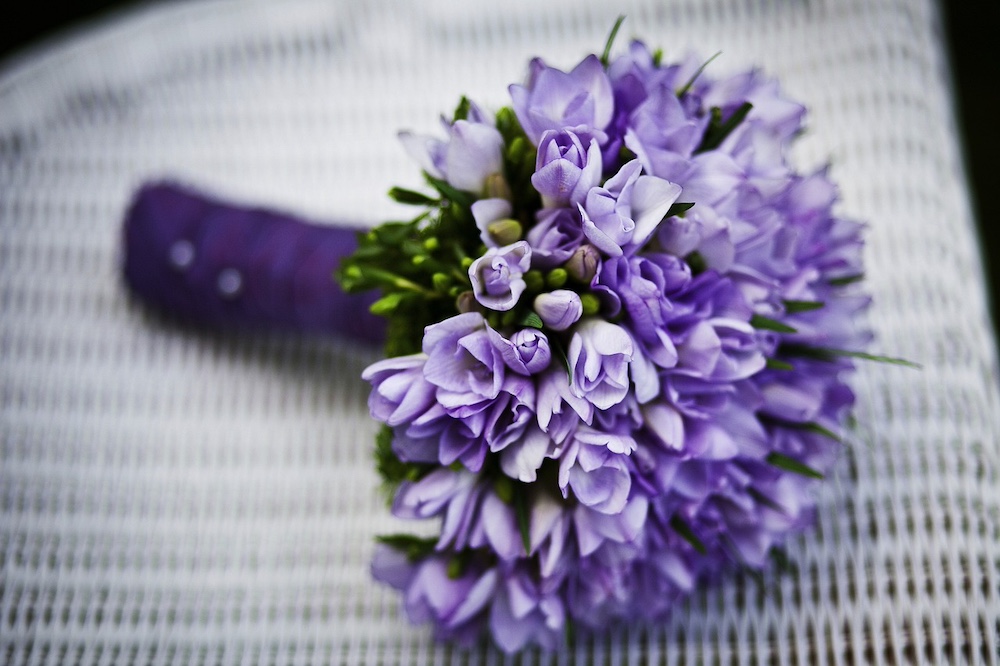
When red and blue come together, they create purple—the very color of unity beyond factions.
So instead of an olive branch, let’s give a gift of a purple flower to someone you disagree with – not as a political statement, but as an invitation to civility. A simple purple stem extended in goodwill can remind us that civility and a desire to wind down the violence is possible—one neighbor, one family member, one colleague at a ti
You can say:- “This is my Purple Accord to you — a reminder that even if we don’t agree on everything, we still share common ground.”
It won’t be the first time flowers have parachuted in to be mediators for peace talks.
Throughout history, flowers have been exchanged to end feuds, laid at memorials to soften grief, planted in public squares as symbols of renewal and remembrance.
They carry no slogans, only beauty, and invite us to pause, to breathe, to recognize one another not as enemies but as fellow travelers. A bouquet, a blossom, humble or grand, cannot solve policy disputes, but it can open the door to civility—the first step toward healing
And there’s evidence that it works.
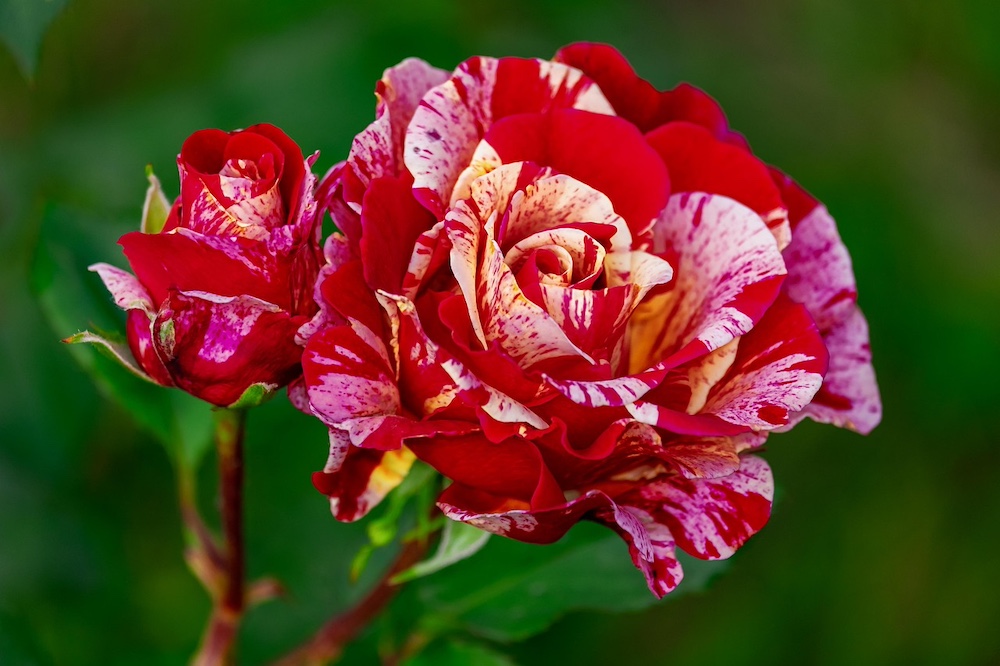
In 15th-century England, rival factions of the House of Lancaster and the House of York fought bitterly in the War of the Roses—one side flying the red rose, the other the white. After years of bloodshed, reconciliation came not through another battle, but through a flower: the Tudor rose, a hybrid bloom combining red and white, created to symbolize unity under Henry VII.
It also came to represent an emblem of peace after division.
Today, purple flowers can serve a similar purpose—a blending of red and blue into one bloom, a reminder that even the fiercest rivalries can find common ground in something as simple, and as profound, as a flower.
As I wrote in my upcoming book, “The Wisdom of Flowers,” history has many examples where flowers thawed heated arguments and divisions.
In Hungary, the Aster Revolution of 1918 briefly toppled monarchy with crowds wearing asters as emblems of democratic hope—showing how a flower could unify people under a vision.
Far more enduring was Portugal’s Carnation Revolution of 1974. On April 25, the long-entrenched Estado Novo dictatorship fell—not with gunfire, but with flowers. As soldiers and civilians poured into the streets of Lisbon, an extraordinary scene unfolded: ordinary people began pressing red carnations into the hands of the troops. Instead of pulling triggers, the soldiers slid the blooms into the barrels of their rifles and pinned them to their uniforms. In that instant, the carnation became the emblem of a peaceful uprising—proof that freedom could be won without widespread bloodshed.
And though America’s Flower Power movement in the 1960s didn’t by itself end the Vietnam War, it did succeed in reshaping culture. Images of daisies and carnations slipped into gun barrels became iconic weapons towards creating new dialogues.
These moments prove that when words fail or tensions harden, flowers can serve as visual olive branches—symbols that disarm, soften, and remind us of our shared longing for peace and civility.
“Hate, it has caused a lot of problems in the world, but has not solved one yet,” noted poet Maya Angelous who also said, “It’s very hard to hate someone if you look them in the eye and recognize them as a human being.” Especially with a flower.
Flowers have a special ability to thaw emotions and recalibrate anxiety which science has proven repeatedly. In a Rutgers study, even among men who received a flower, people displayed more eye contact, genuine smiles, and closeness — small but real shifts in tone and openness.
Flowers, as Sigmund Freud once said, not only “eases suffering” but calms the mind and restores balance and perspective.
So gather a bunch of purple flowers, and start giving a stem to people around you with this message. It will feel good, I promise. Even if it’s one person. That’s a start. It shows you want to be part of the solution instead of the problem.
It’s a small gesture, I know. But the goal is to plant a bigger seed and we have to start someplace.
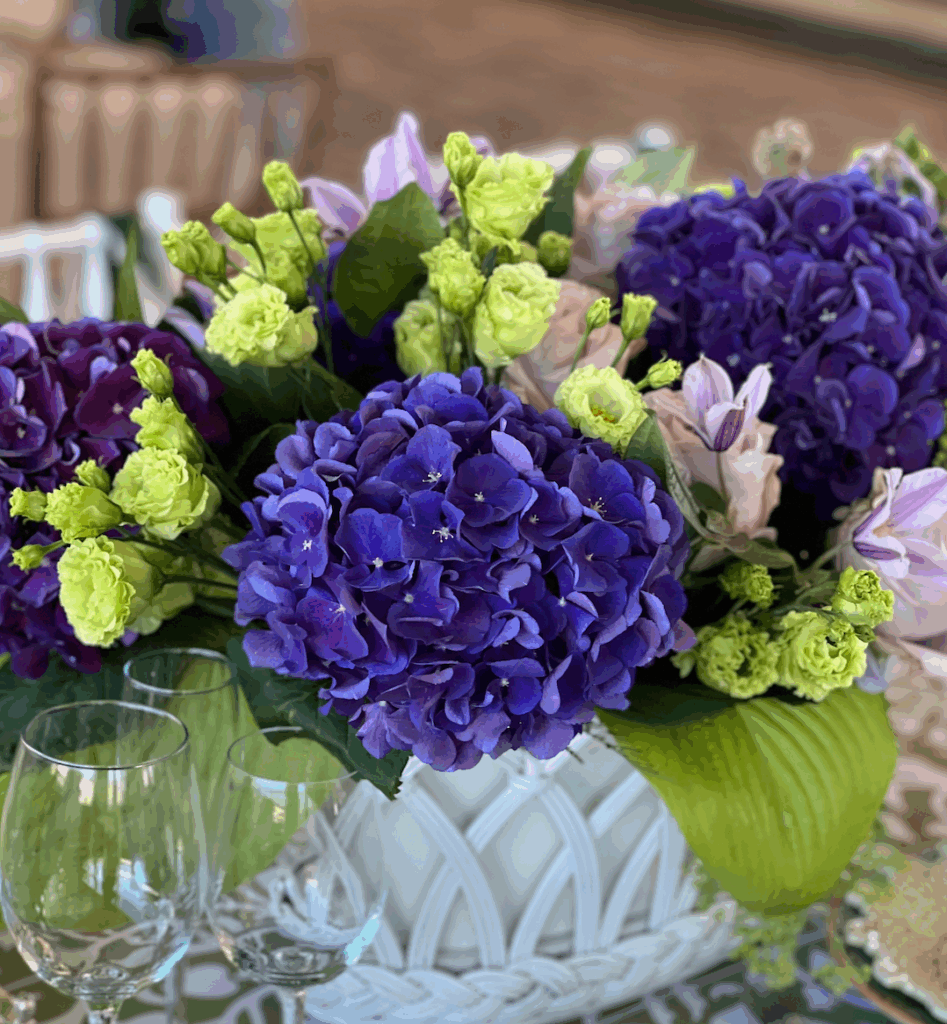
The good news is everyone loves flowers. So whether it’s giving a single tulip or a hyacinth or calling local florists for a bouquet of other blooms – calla lilies, orchids or roses, it is something you can be proud of doing, every time. Maybe email images of purple flowers – or this article.
For the next week, I’ll share a variety of purple flowers with you and send me some of yours.
Let’s move forward and remember what roots us together.
Jill Brooke is a flower historian. A former CNN correspondent, Post columnist and editor-in-chief of Avenue and Travel Savvy magazine, her upcoming book, “The Wisdom of Flowers” will be published in 2026. She is also the founder and editorial director of Flower Power Daily and a columnist at Florists’ Review magazine. She won the 2023 AIFD (American Institute of Floral Designers.) Merit Award for showing how flowers impact history, news and culture. Listen to her on WQHT-AM every Wednesday night.